Reallist: A Warm, Elegant Script Font for Real Branding Projects
Starting Fresh with Reallist on a Branding Board
Today marked the beginning of a new project: crafting a visual identity for a small, artisanal coffee shop in town. I opened my design board with a clean slate, ready to explore a personality that felt welcoming, handcrafted, and a bit nostalgic. My first move? Trying out Reallist. This script font immediately caught my eye with its soft curves and organic flow. It’s the kind of typeface that feels handwritten but still polished—like a personal note from a friend who knows good design.
What Makes Reallist Stand Out
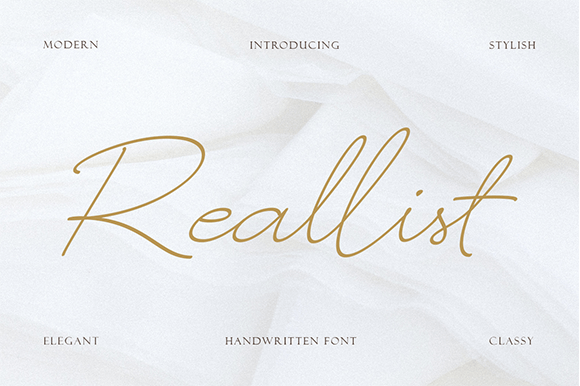
Reallist is a script font in the Script Amp category, designed to bring warmth and elegance to any visual project. It’s not overly formal like some calligraphy fonts, nor is it too casual like a quick pen scrawl. Instead, it strikes a perfect middle ground—ideal for branding work that needs a human touch without sacrificing professionalism.
The letterforms have a natural rhythm, with slight variations in stroke weight that mimic the pressure of a real pen or brush. The ligatures and alternate characters add a nice organic feel, especially when used in logo design or short-form brand names. I noticed that even in all caps, Reallist maintains its charm without becoming stiff or unreadable.
Logo Design with Reallist
My first real test was using Reallist for the café’s logo. I dropped the shop name into a mockup and was surprised at how quickly it started to feel like a real brand. The font’s softness gave the logo a warm, approachable vibe, while its structure kept it from looking too loose or unprofessional.
I played with a few variations—some with swashes, some without—and found that using the ligatures subtly enhanced the visual flow without overcomplicating the design. For a small business looking to stand out in a crowded market, Reallist offered a unique personality that felt authentic and memorable.
Using Reallist Across Brand Touchpoints
Once I had the logo direction, I started placing Reallist across other brand materials to see how it held up. On packaging mockups, it looked great on coffee bags and thank-you cards. The font’s character made the product feel more personal, like it was made just for the customer.
In digital spaces, Reallist worked well as a headline font on the homepage hero section and social media graphics. I used it sparingly—mostly for headlines or featured text—since it’s best suited as a display or accent font. For body copy or longer text, I paired it with a clean sans serif to maintain readability and balance.
Font Pairing Tips
- Pair with a serif for a timeless, editorial feel—perfect for packaging or print ads.
- Combine with a sans serif for a modern, clean contrast—ideal for websites and digital branding.
- Mix with another script font (used sparingly) for a layered, handcrafted look—great for wedding invites or boutique branding.
Practical Design Observations
One thing I appreciated about Reallist was how it scaled across different applications. On a small business card, it remained legible and elegant. On a large poster or shop sign, it had enough visual presence to command attention without looking forced.
I also tested it on a few Instagram templates and noticed how well it integrated with lifestyle photography. The font’s warmth complemented the earthy tones and textures we were using in the brand palette. It added a sense of craftsmanship that aligned with the café’s values.
Testing Before Committing
Before locking in Reallist for the full brand system, I ran a few quick tests:
- Printed samples to see how it looked in real life, not just on screen.
- Checked legibility in different sizes and contexts—especially for product labels and menus.
- Explored alternate characters and ligatures to avoid repetition in repeated use.
- Tested multilingual support since the café had plans to expand its menu into multiple languages.
All in all, Reallist passed each test. The font’s versatility and personality made it a solid choice for both print and digital use, and the included styles gave me enough flexibility to keep the brand feeling dynamic.
When to Use Reallist in Your Work
Based on this project, I’d recommend Reallist for:
- Logo design – especially for brands with a warm, artisanal, or personal tone.
- Packaging design – from product labels to gift tags, it adds a handcrafted feel.
- Social media graphics – works beautifully in quote posts, announcements, and stories.
- Editorial design – great for headers, pull quotes, and special features.
- Printed marketing materials – business cards, posters, and flyers benefit from its elegant warmth.
Final Thoughts for Real Design Work
If you’re working on a branding project that needs a touch of personality without going overboard, Reallist might be the script font you’ve been looking for. It’s not just a pretty face—it’s functional, flexible, and surprisingly adaptable across media.
As a designer, I appreciate tools that help me tell a brand’s story more authentically. Reallist does that by bringing warmth, elegance, and a sense of craftsmanship into every piece of the visual identity. Whether you’re designing for a local café, a boutique shop, or a creative studio, this font can help your work feel more human—and that’s always a good thing.